Tuesday, March 8, 2011

Renault F1

The Renault Formula One team, currently trading as Lotus Renault GP Limited, is a Formula One racing team. It has competed in various forms since 1977, winning Constructors' and Drivers' titles in 2005 and 2006.

Renault had some involvement in early motorsport, including Ferenc Szisz winning the first French Grand Prix. However, it was not until 1977 that the company entered Formula One as a constructor, introducing the turbo engine to Formula One in their first car, the Renault RS01. Although the Renault team won races and competed for world titles, it withdrew at the end of 1985.

Perfect Renault F1 Design

Renault F1 With The Top Speed

Renault returned to Formula One as a team in 2002 when it completed its takeover and rebranding of the UK-based team previously known as Benetton (and before that, Toleman). Under the Renault F1 Team guise the team won the Drivers' and Constructors' championships in 2005 and 2006.


Renault F1 Engine

Sporty Renault F1

Elegant Renault F1

Renault F1 Rear Wheels

Renault has also supplied engines to other teams, including Team Lotus (1980s), Benetton and Williams teams in the 1990s. As an engine supplier, Renault has contributed to six driver's world championships (1992, 1993, 1995, 1996, 1997, 2010) and seven constructor's world championships (1992–1997 and 2010) as engine supplier for Benetton, Williams and Red Bull. The engine supply has continued during periods when Renault was not active as a constructor in its own right.

Wednesday, March 2, 2011

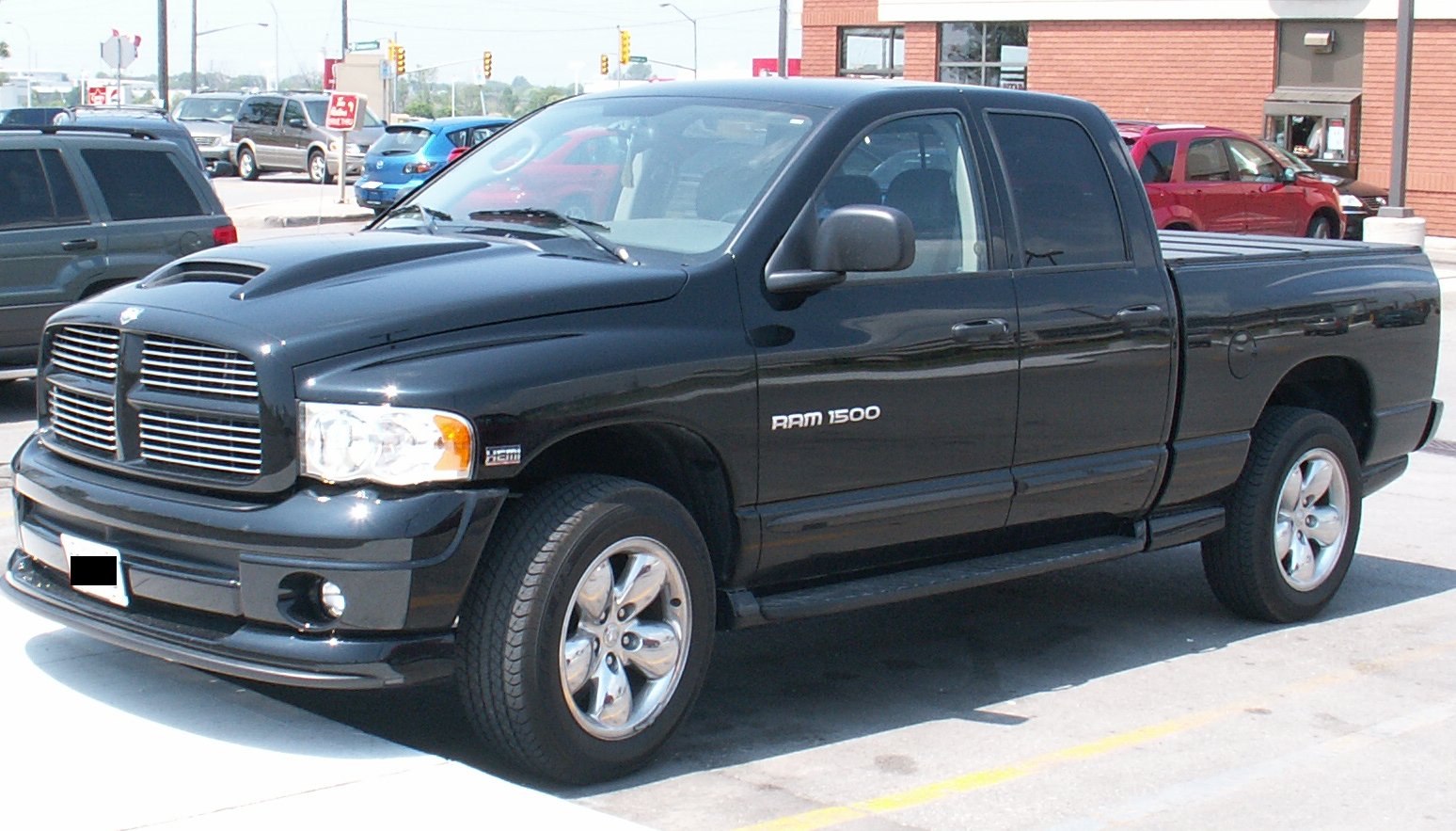
Dodge Ram

The Ram (previously known as the Dodge Ram in the United States and Canada, and still known as being manufactured by Dodge outside the U.S and Canada) is a full-size pickup truck manufactured by the Chrysler Group LLC. As of late 2010, it has been sold under the Ram Trucks brand. Previously, Ram was part of the Dodge lineup of light trucks. The name Ram was first used in 1981 on the redesigned Ram and Power Ram following the retiring and rebadging of the Dodge D Series pickup trucks. The truck is named for the Ram hood ornament that first adorned Dodge cars in the 1930s. The Ram Truck is in its fourth generation as of the 2009 model year. Dodge Ram trucks have been named Motor Trend magazine's Truck of the Year three times; the second-generation Ram won the award in 1994, the third-generation Ram Heavy Duty won the award in 2003, and the fourth-generation Dodge Ram Heavy Duty won in 2010. The Ram is currently built at the Saltillo Truck Assembly in Saltillo, Coahuila, Mexico and at the Warren Truck Assembly in Warren, Michigan, United States.


The first-generation Ram trucks, named for the Ram hood ornament that first graced Dodge cars in the 1930s, was introduced in 1981. Dodge kept the previous generation's model designations: "D" or Ram meant two wheel drive while the "W" or Power Ram meant four wheel drive. Similar to Ford, Dodge used 150 to indicate a half-ton truck, 250 for a three-quarter-ton, and 350 for one-tons. Standard cab, "Club" extended cab, and crew cab versions were offered along with 6.5 ft (2.0 m) and 8 ft (2.4 m) bed lengths and "Utiline" and "Sweptline" styled boxes. Externally, the first-generation Rams were facelifted versions of the previous generation Dodge D-Series pickups introduced in 1972. The new model introduced larger wraparound tail lamps, single rectangular headlamps, and squared-off body lines. The interior was updated and included a newer style bench seat, and a completely new dashboard and instrument cluster. Available engines for these trucks were the 225 cu in (3.7 L) slant six, the 318 cu in (5.2 L) V8, and the 360 cu in (5.9 L) V8 with a variety of carburetors available for each engine. Among the other options offered on the Ram were front bumper guards, a sliding rear cab window, power door locks and windows, and a plowing package for the 4-wheel drive version (referred to as the Sno Commander).


The Insurance Institute for Highway Safety gave the 1994-2001 models a "poor" rating, for poor structural performance, poor dummy control, and high head and neck forces caused by a late-deploying airbag. No full-sized pickup from an American automaker earned better than a "marginal" during this time period.Transmissions for the Ram were the lower geared A500/42RH-RE for light duty applications found behind the 3.9 L V6, the A518/46RH-RE for more heavy duty applications found behind the 5.2 L and 5.9 L V8 engines, and the A618/47RH-RE for heavy duty use behind the V10 gasoline and Cummins diesel engines. The 47RH was used in 1994 and 1995 model years, while the 47RE was used from 1996 through 2002. A NV3500 was offered in 1500 Rams and light duty 2500 Rams. A NV4500 was standard in 2500 and 3500 trucks (except the uncommon, light duty 2500 rams). A NV5600 was offered in 2000 Rams and was the only transmission offered behind the High Output diesel in 2001 and 2002.There were a total of 5 transfer cases for the four wheel drive Ram. All were part time and had a low range of 2.72:1. The 1500 featured a NP231 and NP231HD. The NP241 was standard on V8 2500 Rams. The 2500 and 3500 V10 and Diesel featured a NP241DLD from 1994-1997. In 1997 the NP241DHD became a option for all 2500 Rams and was standard on 3500 Rams from 1998-2002.A natural gas engine debuted for 1995 but was not popular and was only used in fleet vehicles on a very limited production run. The Cummins B Series engine was switched from the 12-Valve to the 24-Valve (ISB) in the middle of the 1998 model year Dodge Rams due to emissions regulations. The ISB featured a new computer controlled injection pump, 24 valve head design and a electric fuel transfer pump.

Tuesday, March 1, 2011

Volkswagen Beetle

The Volkswagen Type 1, widely known as the Volkswagen Beetle, is an economy car produced by the German auto maker Volkswagen (VW) from 1938 until 2003. With over 21 million manufactured in an air-cooled, rear-engined, rear-wheel drive configuration, the Beetle is the longest-running and most-manufactured automobile of a single design platform anywhere in the world.

Luxury Red Volkswagen Beetle

The Beetle is widely used in drag racing; its rearward (RR layout) weight distribution keeps the weight over the rear wheels, maximizing grip off the starting line. The car's weight is reduced for a full competition drag Beetle, further improving the grip and also the power to weight ratio. Combined with the Beetle's RR layout, wheelies can be achieved easily, but time "in the air" worsens 1/4 mile time. To prevent this, "wheelie bars" are added. The fastest time a beetle has run in the quarter mile was 7.78 in 2008.


Modified Volkswagen Beetles

Great Volkswagen Beetle

Customized Beetle styles include the Rat rod and Cal Look which evolved during its lifespan. Customisation includes lowering the car's suspension, altering the wheels, removing or replacing the bumpers, as with pushbar. The stock bumpers are usually chromed or polished, sometimes painted or powder coated. Clubs dedicated to 'Cal Look' occur worldwide.Customizing may also include smoothing or shaving the body — removing trim and other parts, including door handles, badges and driprails, Frenching or tunnelling the headlights, lowering, custom hood and trunk hinging, chopping and lowering of the roof and replacing taillights and front indicators with smaller, simpler units.

Volkswagen Beetle Hatchback

Its engine, transmission, and cylinder heads were constructed of light alloy. An engine oil cooler (located in the engine fan's shroud) ensured optimal engine operating temperature and long engine life, optimized by a thermostat that bypassed the oil cooler when the engine was cold. Later models of the carburetor featured an automatic choke. Engine intake air passed through a metallic filter, while heavier particles were captured by an oil bath. After 1960, steering featured a hydraulic damper that absorbed steering irregularities.