 old Silver Porsche 914
 Black Porsche 914 Front Side View
 Blue Porsche 914 Fashion
 3 in 1 Orange Porsche 914
 Porsche 914 Interior
 Yellow Porsche 914 Show View
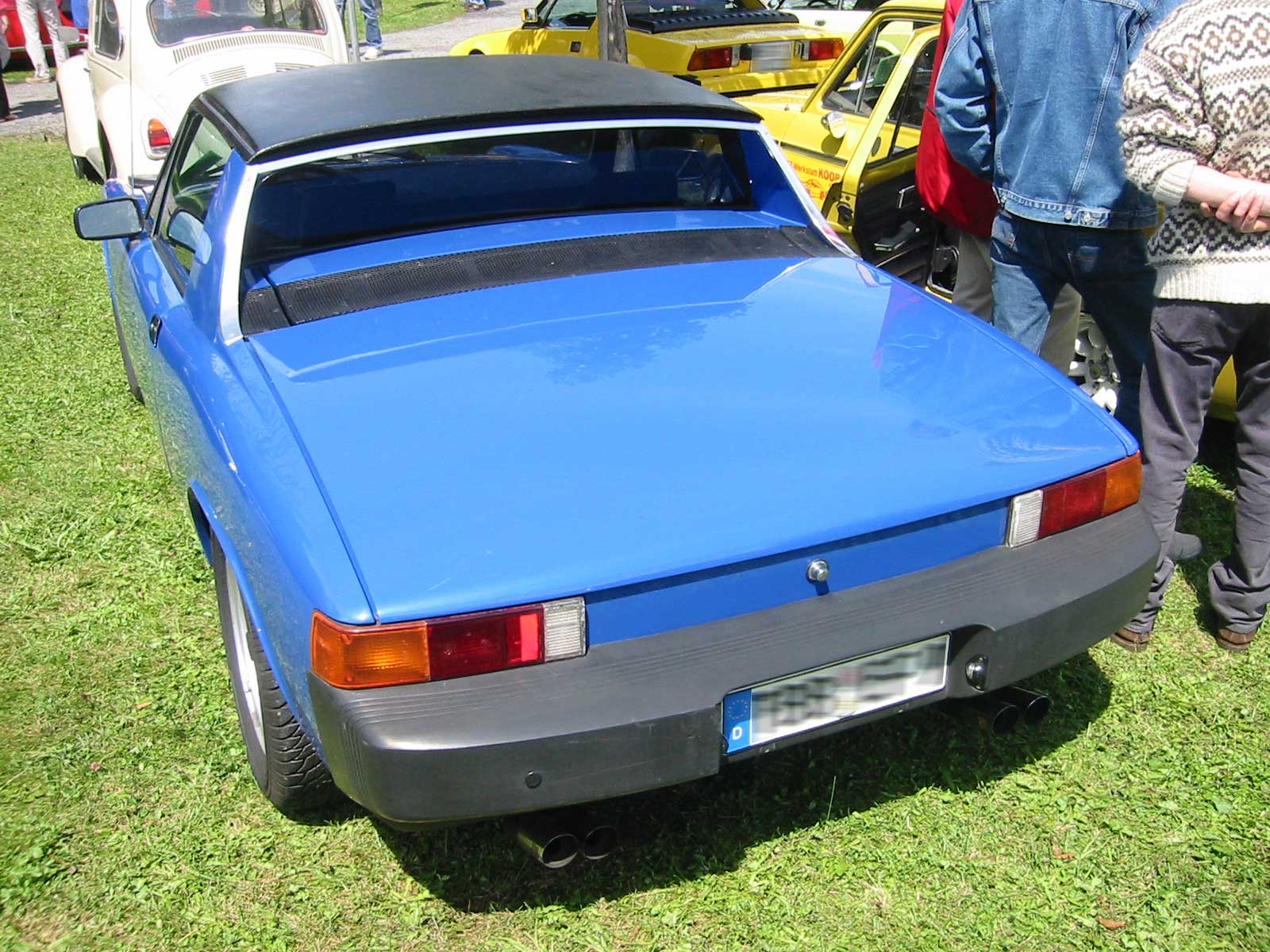 Blue Porsche 914 Hatchbackold Silver Porsche 914Black Porsche 914 Front Side ViewBlue Porsche 914 Fashion3 in 1 Orange Porsche 914Porsche 914 InteriorYellow Porsche 914 Show ViewBlue Porsche 914 Hatchback
 Luxury Orange Porsche GT3
 Black Posche GT3 Fast Cars
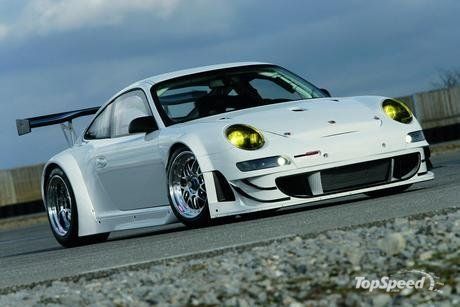 White Posche GT3 on The Road
 Orange Posche GT3 Front Side View
 Elegant Black Porsche GT3
 White Porsche GT3 Performance
 White Porsche GT3 Hatchback
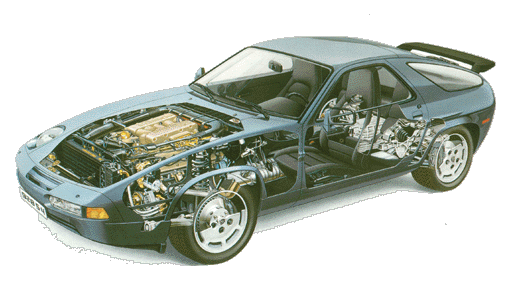
 Since its inception in 1949, Porsche has manufactured only six front-engined models, four of which were coupes, including the 928. The car has the distinction of being the company's only coupe powered by a front-mounted V8 engine, and the company's first mass-produced V8 powered model.During 1983 the 928S was the fastest car sold in North America, with a top speed of 146 mph (235 km/h).
 By the late 1960s, Porsche had changed significantly as a company, and executives including owner Ferdinand Porsche were playing with the idea of adding a luxury touring car to the line-up. Managing Director Ernst Fuhrmann was also pressuring Ferdinand to approve development of the new model in light of concerns that the current flagship model at the time, the 911, was quickly reaching its maximum potential where it could soon no longer be improved upon. Slumping sales of the 911 seemed to confirm that the model was approaching the end of its economic life cycle. Fuhrmann envisioned the new range-topping model as being the best possible combination of a sports coupe and a luxury sedan, something well equipped and comfortable enough to be easily driven over long distances that also had the power, poise and handling prowess necessary to be driven like a sports car. This set it apart from the 911, which was a pure sports car.
 Porsche engineers wanted a large-displacement motor to power the 928, and prototype units were built with a 5.0 L V8 producing close to 300 hp (220 kW). Ferdinand Pieche wanted this car to use a 4.6 liter V10 with 88 mm bore spacing based upon Audi's five cylinder engine. This five cylinder is a derivative of the Volkswagen Golf EA827 engine, basically a four with another cylinder added. Several members of the Porsche board objected; their official objection was because they wanted Porsche AG to maintain some separation from Volkswagen. The possible reason was that they didn't want their crowning car to be powered by a variant of the lowly VW Golf engine. Interestingly, this same proposed engine [albeit with greater displacement] was eventually built and installed in a production sports car— the Lamborghini Gallardo. To this day, no Porsche has ever used an EA827-based engine. Until 2011 they used a version of the VW VR6 engine in the Cayenne [955], but that motor is not related to the EA827 design.
 The 928 featured a large, front-mounted and water-cooled V8 engine driving the rear wheels. Originally displacing 4.5 L and featuring a single overhead camshaft design, it produced 219 hp (163 kW/222 PS) for the North American market and 237 hp (176 kW/240 PS) in other markets. Porsche upgraded the engine from mechanical to electronic fuel injection in 1980 for US models, although power remained the same. This design marked a major change in direction for Porsche (started with the introduction of the Porsche 924 in 1976), whose cars had until then used only rear- or mid-mounted air-cooled flat engines with four or six cylinders.
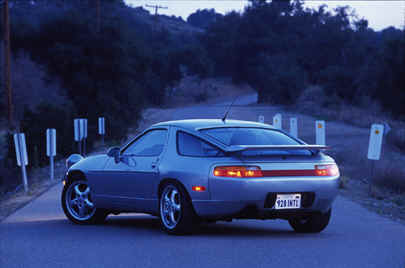 The body, styled by Wolfgang Möbius under guidance of Anatole Lapine, was mainly galvanized steel, but the doors, front fenders, and hood were aluminum in order to make the car more lightweight. It had a substantial luggage area accessed via a large hatchback. The new polyurethane elastic bumpers were integrated into the nose and tail and covered in body-coloured plastic; an unusual feature for the time that aided the car visually and reduced its drag. Porsche opted not to offer a convertible variant but several aftermarket modifiers offered convertible conversions, most notably Carelli, based in Orange County, CA. The Carelli conversions were sold as complete cars, with the conversion doubling the price of the car. A reported 12 units were made.
 Porsche's design and development efforts paid off during the 1978 European Car of the Year competition where the 928 won ahead of the BMW 7-series and the Ford Granada. The 928 is the only sports car so far to have won this competition, where the usual winners are mainstream hatchbacks and sedans/saloons from major European manufacturers. This is regarded as proof of how advanced the 928 was compared to its contemporaries.
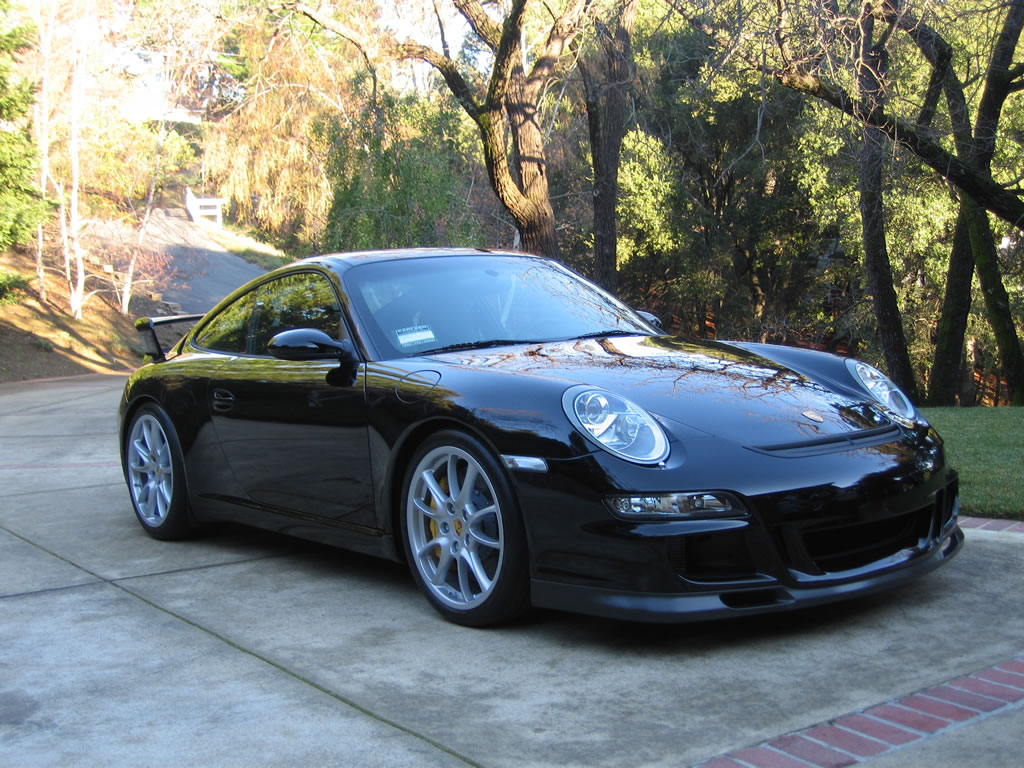 The Porsche 911 GT3 is a high performance version of the Porsche 911 sports car. It is the latest in a long line of high performance models, beginning with the 1973 911 RS. The GT3, named after the FIA GT class for which it was intended, has a 3.6 litre naturally aspirated six-cylinder engine, based on the unit used in the Porsche 962 and Porsche 911 GT1 race cars.
 A number of variations, designed for both road and track, have been added to the range since its launch in 1999. The current range (997) includes two road and three racing models. In addition to this, Porsche is currently developing a hybrid version that uses two electric motors and a kinetic energy recovery system, as initially developed for Formula One.
 The GT3 has had a successful racing career in the one make national Porsche Carrera Cup series, the international Porsche Supercup, and also winning numerous championship and endurance races, including the GT class of the American Le Mans Series seven times, the 24 Hours of Daytona outright and the 24 Hours Nürburgring five times.
 The engine of the GT3 sets it apart from most of the other 996 models although it shares the same basic 3.6 liter displacement of the standard 996 type so-called "integrated dry-sump" flat-six engine. Along with those of the GT2 and Turbo, it is actually based on the original air-cooled 911's versatile, true dry-sump crankcase, with an external oil tank. The original version of the GT3 had 360 PS (265 kW; 355 hp), compared to the 300 PS (221 kW; 296 hp) of the regular 996.In GT3 configuration, this so called "split" crankcase (meaning the parting line of crankcase is on the crankshaft centerline) uses, instead of a fan and finned cylinders, separate water jackets added onto each side of the crankcase to cool banks of three cylinders with water pumped though a radiator. Thus, the GT3 engine is very similar to the completely water cooled 962 racing car's engine, which is also based on this same crankcase. The 962 differs, however, by using 6 individual cylinder heads while the GT1/GT3, like the air and water cooled Porsche 959, uses 2 cylinder heads, each covering a bank of 3 cylinders. The GT3 engine could thus also be thought of as similar to a 959 engine, but with water-cooled cylinders.Up to early model year 2004 GT3 production, the basic casting used for the crankcase of the GT3 was exactly the same as the air-cooled engine and one could see the "964" casting number on the bottom of the crankcase and areas normally machined in the air-cooled application that are not machined for use in the water-cooled application. The crankcase casting was changed in mid-2004 to a "996" casting number crankcase to eliminate these external air-cooled remnants, but internally it is the same.
 Because the 911 air-cooled crankcase uses the Porsche 356 engine to transmission mounting flange configuration, the GT3 uses a manual gearbox also of air-cooled 911 heritage. This gearbox has interchangeable gear ratios and is more durable making it more suitable for racing than the standard 911 type 996 gearbox.At 500 hp (373 kW), the 4.0 litre flat-six engine in the 997 GT3 RS 4.0 is the most powerful six cylinder naturally aspirated engine in any production car with a 125 hp (93 kW) per liter output.
 Elegant Silver Porsche Cayman
 Duo Porsche Cayman
 Black Porsche Cayman Front View
 Orange Porsche Cayman Performance
 Luxury White Porsche Cayman
 Silver Porsche Cayman Front Side View
 Porsche Cayman Interior
 Red Porsche Panamera Fashion
 Luxury Black Porsche Panamera
 Porsche Panamera Interior
 Blue Porsche Panamera Performance
 Silver Porsche Panamera Hatchback
 Silver Porsche Panamera Front Side View
 Silver Porsche Panamera Fast Cars
 The Porsche Boxster is a mid-engined roadster built by Porsche. The Boxster is Porsche's first road vehicle since the 550 Spyder that was originally designed as a roadster. The first-generation Boxster (the 986) was introduced in late 1996 as a 1997 model; it was powered by a 2.5 litre flat six-cylinder engine. In 2000, the new Boxster S variant was introduced with a larger 3.2 litre motor, and the base model received a more powerful 2.7 litre engine. In 2003, styling and engine output was upgraded on both variants. In 2005, Porsche unveiled the new generation of Boxsters: the type 987. The 987 is more powerful than its predecessor and featured styling inspired by the Carrera GT. Engine output increased in 2007, when both Boxster models received the engines from their corresponding Porsche Cayman variants. In 2009, the Boxster models received several new cosmetic and mechanical upgrades, further increasing engine output and performance. Production of the 986 began at the former Porsche 928 facility in Stuttgart, Germany in 1996. Valmet Automotive also manufactures Boxsters under contract to Porsche at a facility in Uusikaupunki, Finland. The Boxster was Porsche's biggest volume seller from its introduction in model year 1997 until the company introduced the Cayenne sport utility vehicle in model year 2003. The Boxster's name is a portmanteau of the word "boxer", referring to the vehicle's horizontally-opposed or "boxer" engine, and the word "roadster", referring to the vehicle's two seat capacity and convertible top.
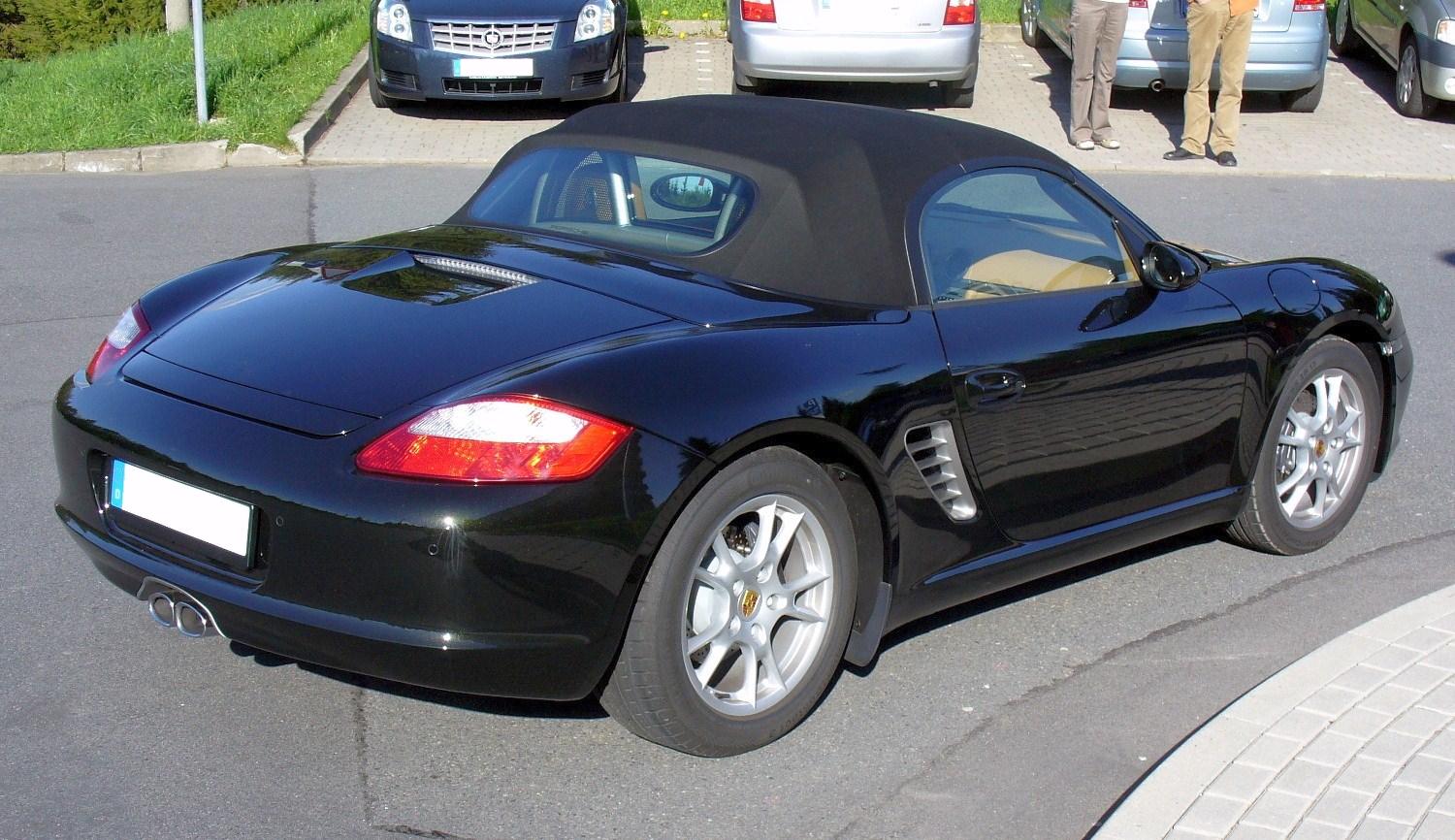 In 2004 the 550 Spyder 50th Anniversary Edition was released, with a production run of just 1953 cars. These were all painted GT Silver Metallic, the same color as the car-show version of the Carrera GT supercar, and had unique cocoa-brown full-leather interior as standard with grey natural leather as a no-cost option. Each car also had special interior paintwork, a high-end BOSE sound system, two-tone grey and silver 18" Carrera wheels (unpainted as another zero-cost option), 5 mm (0.2 in) wheel spacers, the Boxster S sport exhaust, the M030 option sports suspension, and a plate on the center console piece commonly known as the "batwing" showing the production number. Only on the American market cars were the rear turn signals red rather than clear.In November 2007, Porsche announced a commemorative RS60 Spyder edition of the Boxster to celebrate Porsche's 1960 win in the 12 Hours of Sebring in Florida. Only 1960 units in this series are to be produced worldwide, with approximately 800 slated for the U.S. with each model bearing a numbered production badge on the dash. The RS60 Spyder comes in only GT Silver Metallic while the standard interior is Carrera Red leather, with dark gray leather as an option. The RS60 comes standard with 19 inch SportDesign alloy wheels, Porsche's Active Suspension Management System, and a sports exhaust that boosts the engine output to 303 PS (223 kW; 299 hp) . The base price for the RS60 Spyder is US$64,900.Porsche also produced a limited Boxster S Porsche Design Edition 2 that debuted in October 2008 as 2009 model. It featured freer-flowing exhaust, which raised power from 295 PS (217 kW; 291 hp) at 6250 rpm to 303 PS (223 kW; 299 hp) at an identical 6250 rpm. It came in a unified Carrara White paint scheme with matching white 19-inch wheels, a black and grey interior with white gauges, red taillights and light grey stripes along the entire body. 500 were made for the worldwide market, 32 shipped into the U.S. and 18 into Canada. The base price for the PDE2 Boxster was US$66,900.
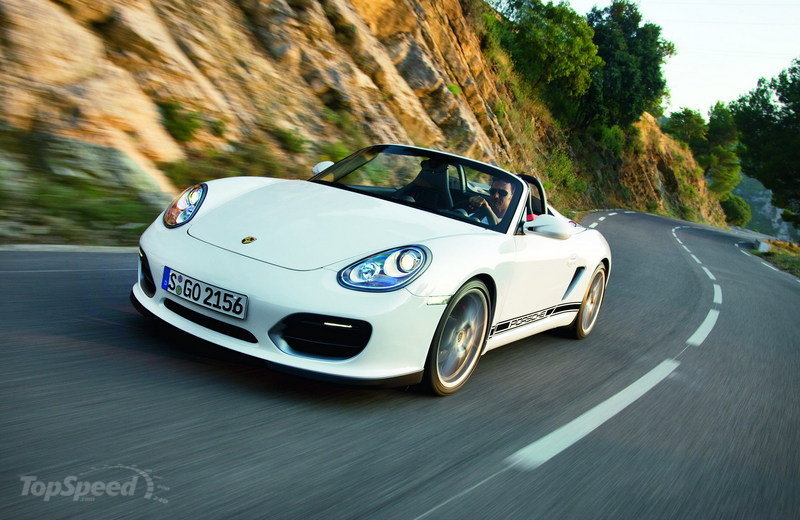 On November 5, 2009, Porsche officially announced the creation of a new production Boxster which was officially unveiled at the 2009 Los Angeles Motor Show. To be positioned above the Boxster S, the Boxster Spyder will be the lightest Porsche on the market, weighing 2,811 pounds (1,275 kg), a full 176 pounds (80 kg) lighter than a Boxster S. This has been achieved through the elimination of the conventional soft top's operating mechanism, the radio/PCM unit, air conditioning, storage compartments, door handles, cupholders and large LED light modules on the front fascia, although some of these can be re-added to the car in the form of options. The vehicle will ride on a firmer suspension than the other Boxster models, and will also be almost one inch lower in order to have firmer handling. A manually-operated canvas top, sports bucket seats and two signature humps running along the back of the vehicle provide characteristic design elements. It will offer a six-cylinder boxer engine with 320 horsepower (239 kW; 324 PS) and 273 lb·ft (370 N·m) of torque (a 10 hp (7.5 kW) increase over the engine in the Boxster S and the same engine used in the related Cayman S), with manual transmission as standard and Porsche's PDK dual-clutch gearbox as an option. The vehicle will be released worldwide in February 2011 as a 2011 model with a base price of US$61,200.A Boxster Spec racing series based on the early 1997-1999 2.5-liter models has become very popular in both the Porsche Owners Club and Porsche Club of America . There are currently two classes: BSX and BSR. The Boxster BSX models are street-legal, with modified suspensions and additional safety equipment. The Boxster BSR models have gutted interiors, further suspension upgrades to improve performance, safety roll cages, and open exhaust.
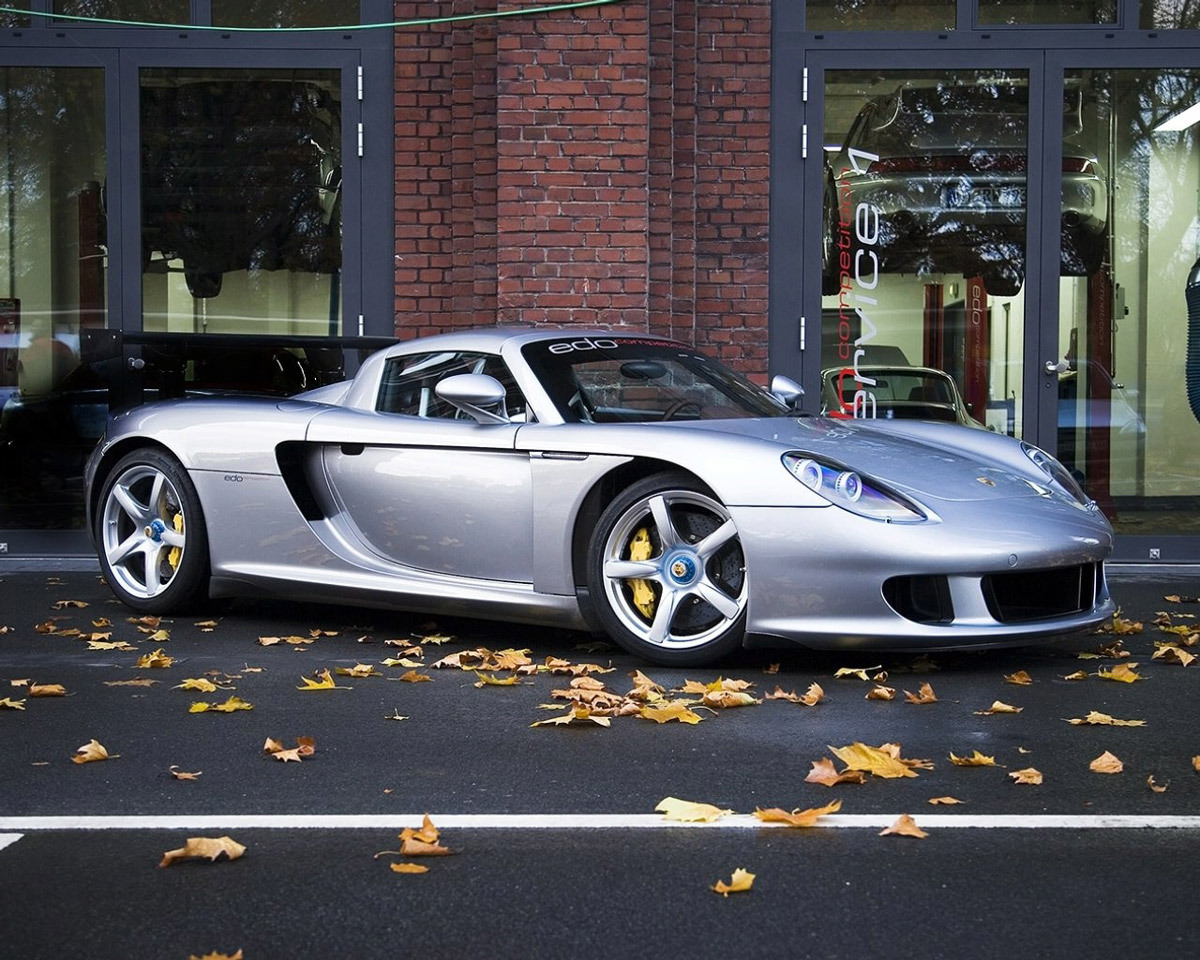 Porsche Carera GT Right Side
 Red Porsche Carera GT
 Orange Porsche Carera GT Looking Great
 Sporty White Porsche Carera GT
 Red Porsche Carera GT Concept
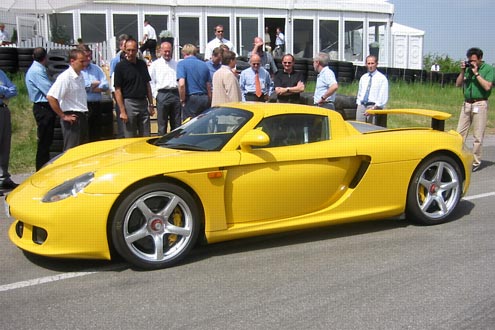 Yellow Porsche Carera GT Left Side
 Luxury Black Porsche Carera GT Concept
 Silver Porsche Carera GT on the Road
